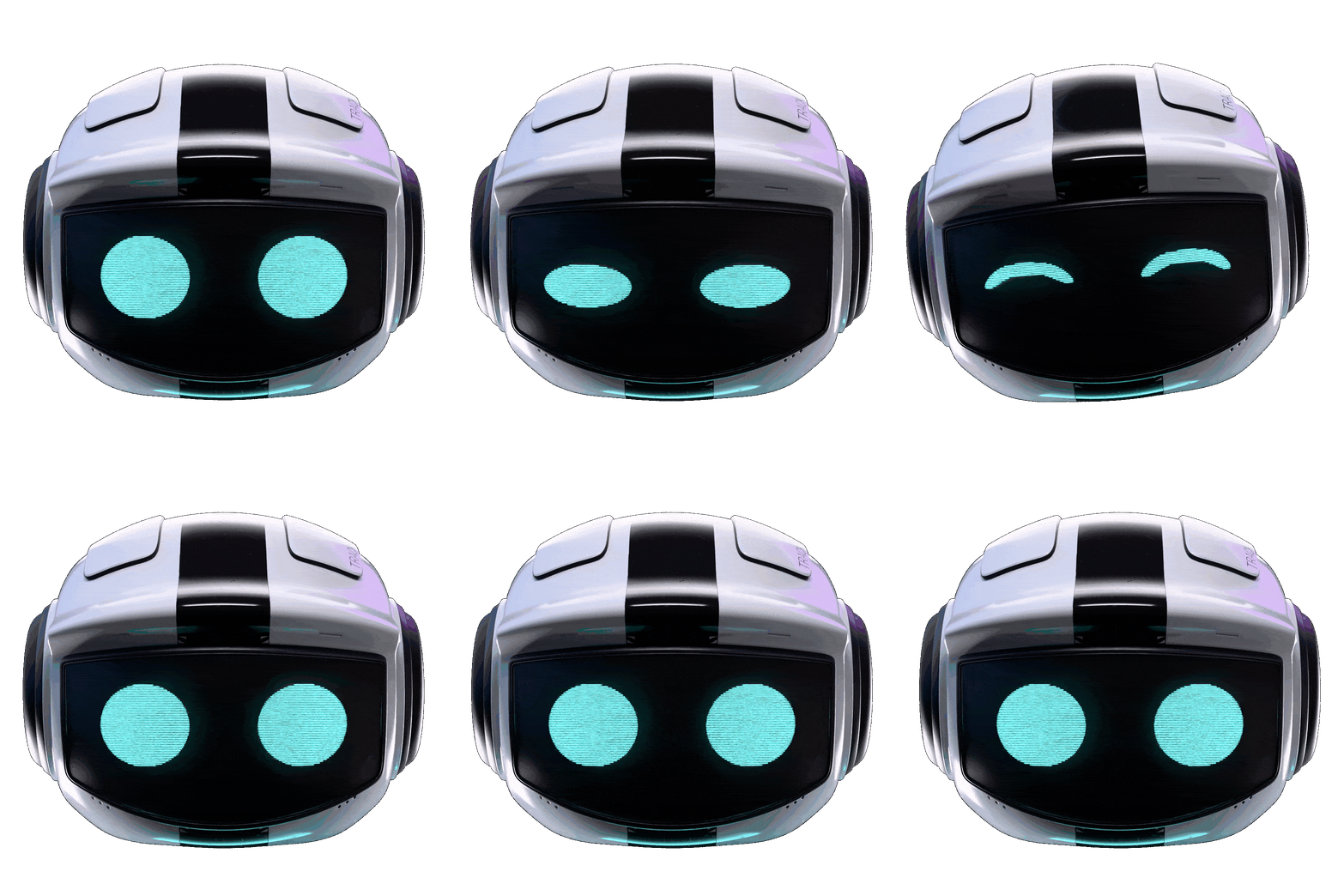
Your Trusted Digital Transformation Partner
From startup validation to enterprise-scale solutions, we turn your vision into reality with Custom Software, Blockchain, Augmented Reality, Virtual Reality, and AI Solutions.
Trusted by Amazing Brands

OUR SERVICES
Turn Your Ideas into Digital Products
Tap a service to explore
Custom Software Development
AR / VR
Blockchain Development
AI & Machine Learning
Custom Software Development
When generic tools create more problems than they solve, we step in building bespoke web, mobile, and cloud software that works the way your business works.
Blockchain Development
If intermediaries, paperwork, and untraceable transactions are costing your business time and money, our blockchain development team builds the infrastructure to fix that permanently.
AR/VR
We build AR and VR experiences that replace flat, forgettable content with immersive environments, so your teams train better, your customers engage deeper, and your brand is impossible to ignore.
AI & Machine Learning
Your team is spending too much time on work that AI can handle better. We build the custom models, automation tools, and intelligent systems that give that time back and turn your data into competitive advantage.
Custom Software Development
When generic tools create more problems than they solve, we step in — building bespoke web, mobile, and cloud software that works the way your business works.
7
+ years of experience
500K+
Lines of Code
15+
Team Members
OUR STRENGTH
Why Businesses Choose Us ?
Technology Agnostic Excellence :
We don't force-fit your needs into our favourite technologies. Instead, we master the tools your business requires, whether that's AI, blockchain, custom software, or AR/VR. Our versatility means you get the right solution, not just what we're comfortable building.
Business-First Approach :
Technology is our craft, but your business success is our mission. We start every project by understanding your goals, challenges, and constraints. Then we design solutions that deliver measurable ROI, not just impressive tech specs.
Partnership, Not Just Delivery :
We're not a "build it and disappear" agency. From initial consultation through long-term roadmaps and continuous optimisation, we're invested in your success. Many of our clients have worked with us for years, evolving their digital capabilities as their businesses grow.
TESTIMONIALS
What Our Clients Say
Don't just take our word for it. Here is what some of our partners have to say about our collaborations and the results we've achieved together.







SKILLS
Tools & Technologies We Use


Building innovative software solutions that transform businesses and drive digital excellence.


© 2026 TrackGenesis® | All rights reserved
